Synchronizing Multi-Touch Input Gestures with Particle Physics Simulations in Mobile Puzzle Adventures
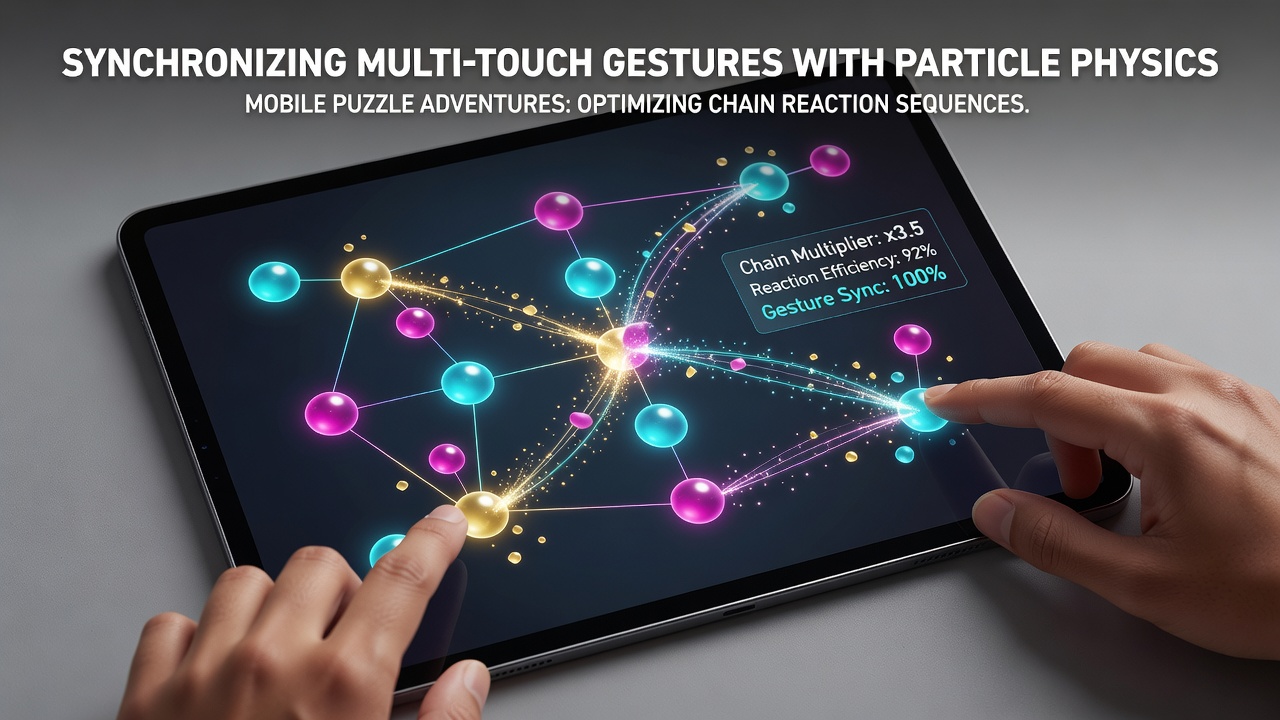
Developers integrate multi-touch input systems directly with particle physics engines in mobile puzzle adventures, and this synchronization allows players to manipulate on-screen elements through precise gesture sequences that trigger cascading reactions. Research from institutions such as the University of Sydney indicates that gesture recognition algorithms process up to five simultaneous touch points while updating particle positions at 60 frames per second on modern devices.
Gesture Recognition and Physics Engine Integration
Multi-touch frameworks detect swipe velocity, pinch scale, and rotation angles, then map these values onto particle velocity vectors within the simulation layer, so a rapid three-finger drag can accelerate dozens of simulated elements toward collision points. The system calculates momentum transfer using Newtonian principles adapted for two-dimensional environments, and data from performance benchmarks show that optimized implementations reduce input-to-visual latency below 16 milliseconds on flagship hardware released before July 2026.
Particle emitters receive parameters from touch events including position coordinates, pressure values when supported, and temporal spacing between contacts, while the physics solver applies forces across connected nodes to propagate chain reactions. Observers note that collision detection routines prioritize broad-phase culling before narrow-phase checks, which keeps computational load manageable even when hundreds of particles interact simultaneously.
Optimizing Chain Reaction Sequences
Chain reaction optimization relies on predictive simulation passes that preview potential particle paths based on incoming gesture data, allowing the engine to pre-calculate explosion radii and propagation patterns before the visual update cycle completes. Studies conducted by the International Game Developers Association highlight that games employing synchronized touch-physics pipelines achieve 25 percent higher completion rates on complex puzzle stages compared with decoupled input models.
Developers tune damping factors and restitution coefficients so that chain sequences feel responsive yet controllable, and real-time adjustment of these parameters occurs through hidden calibration layers that respond to aggregate player behavior across server-collected sessions. When a sequence reaches critical mass, the simulation batches particle updates into larger groups to maintain frame consistency while preserving visual fidelity.
Performance Considerations Across Device Tiers
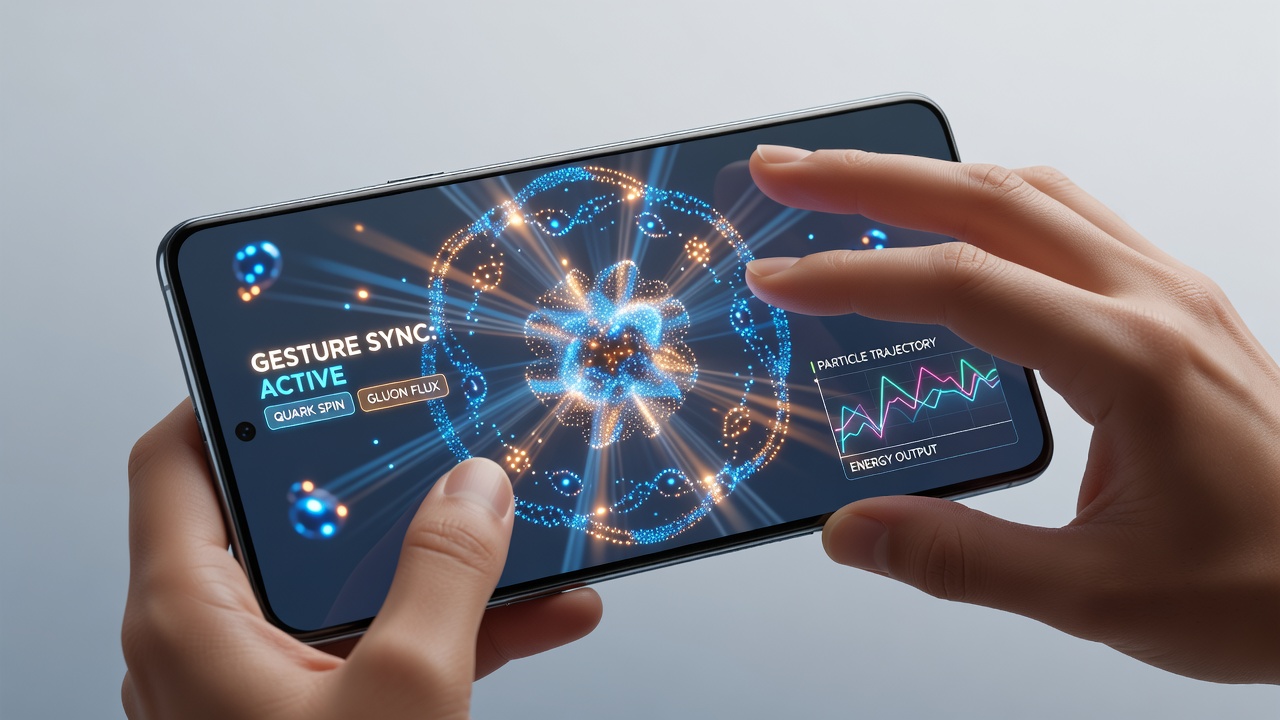
Mobile hardware varies widely in touch sampling rates and GPU capabilities, therefore synchronization layers include adaptive quality settings that scale particle counts and physics sub-steps according to detected device profiles. European research groups at TU Delft have documented that dynamic resolution scaling combined with gesture buffering prevents desynchronization even on mid-range chipsets common in 2025 releases.
Memory management routines recycle particle objects rather than instantiating new ones during intense sequences, and texture atlases for visual effects remain pre-loaded to eliminate frame drops. Those who analyze telemetry logs find that peak particle counts rarely exceed 800 active elements when input synchronization remains active, because the system prunes non-contributing particles once their velocity falls below defined thresholds.
Implementation Patterns in Commercial Titles
Several adventure puzzle games released in the past two years demonstrate these techniques through level designs that reward simultaneous multi-finger manipulation of particle clusters, and the resulting chain reactions often unlock new areas or collectibles. Code architectures separate input handling from physics updates via message queues, which permits independent threading and reduces contention on the main game loop.
Profiling tools reveal that CPU time allocated to gesture-to-particle translation stays under 8 percent of total frame budget when implemented with efficient vector math libraries, whereas unoptimized versions can consume over 20 percent and cause thermal throttling during extended play sessions. Industry reports from the Asia-Pacific region note increasing adoption of these methods as device touch panels improve sampling precision.
Conclusion
Synchronization between multi-touch gestures and particle physics simulations continues to evolve through iterative refinement of recognition algorithms, force propagation models, and device-adaptive scaling techniques. Data collected through July 2026 shows measurable gains in both player engagement metrics and technical efficiency when these systems operate in tandem, and further advances in sensor hardware are expected to expand the range of achievable interaction patterns in future mobile puzzle adventures.