Revealing Sensor Fusion Methods That Blend Gyroscope and GPS Inputs for Realistic Vehicle Handling in Mobile Racing Simulations
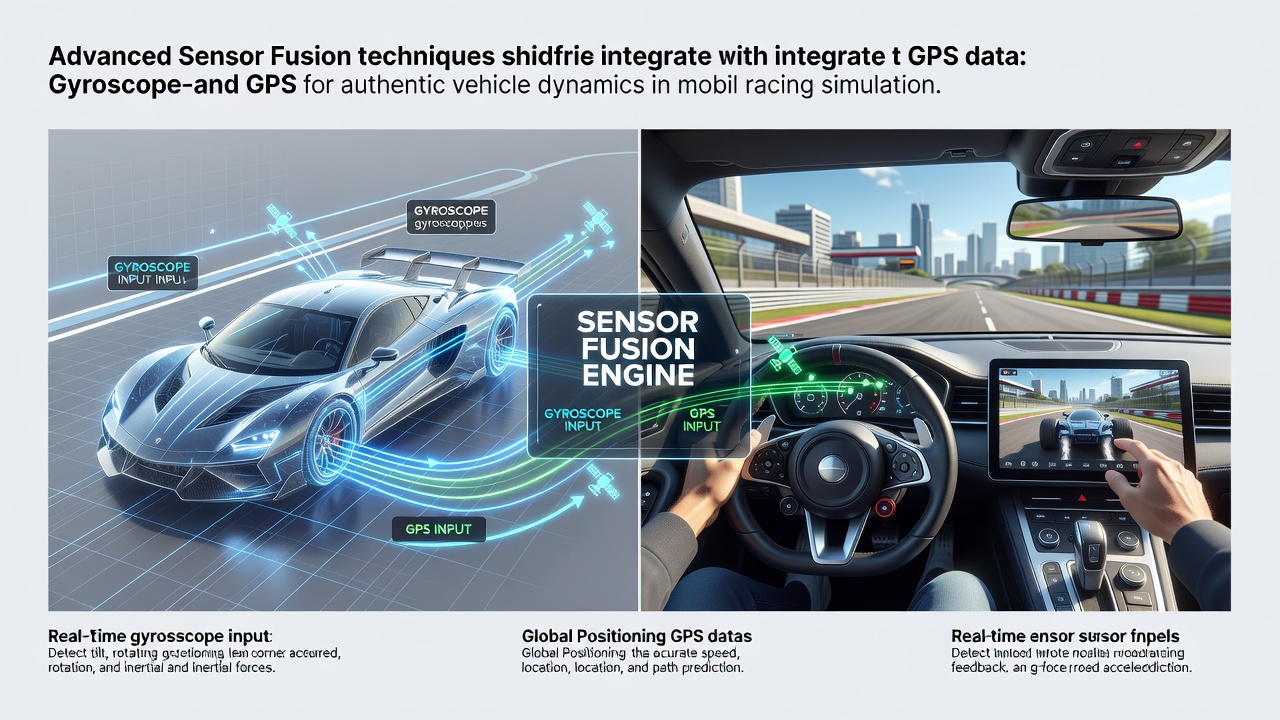 Developers integrate gyroscope readings that capture rotational velocity with GPS signals providing positional and velocity data to create responsive vehicle dynamics in mobile racing titles. This combination addresses limitations where standalone sensors fall short, such as GPS drift during rapid maneuvers or gyroscope accumulation of small errors over time. Studies on mobile sensor applications indicate that fusion algorithms process these inputs at high frequency to adjust steering, acceleration, and drift mechanics in real time.
Core Components of Gyroscope and GPS Data Streams
Gyroscopes in smartphones measure angular rates along three axes, delivering orientation changes that translate directly into vehicle tilt and turn rates within simulations. GPS receivers supply latitude, longitude, and speed estimates derived from satellite signals, though urban environments often introduce multipath interference that reduces precision. Observers note that racing games rely on these streams because raw gyroscope data lacks absolute positioning while GPS alone cannot convey instantaneous rotational feedback needed for cornering physics.
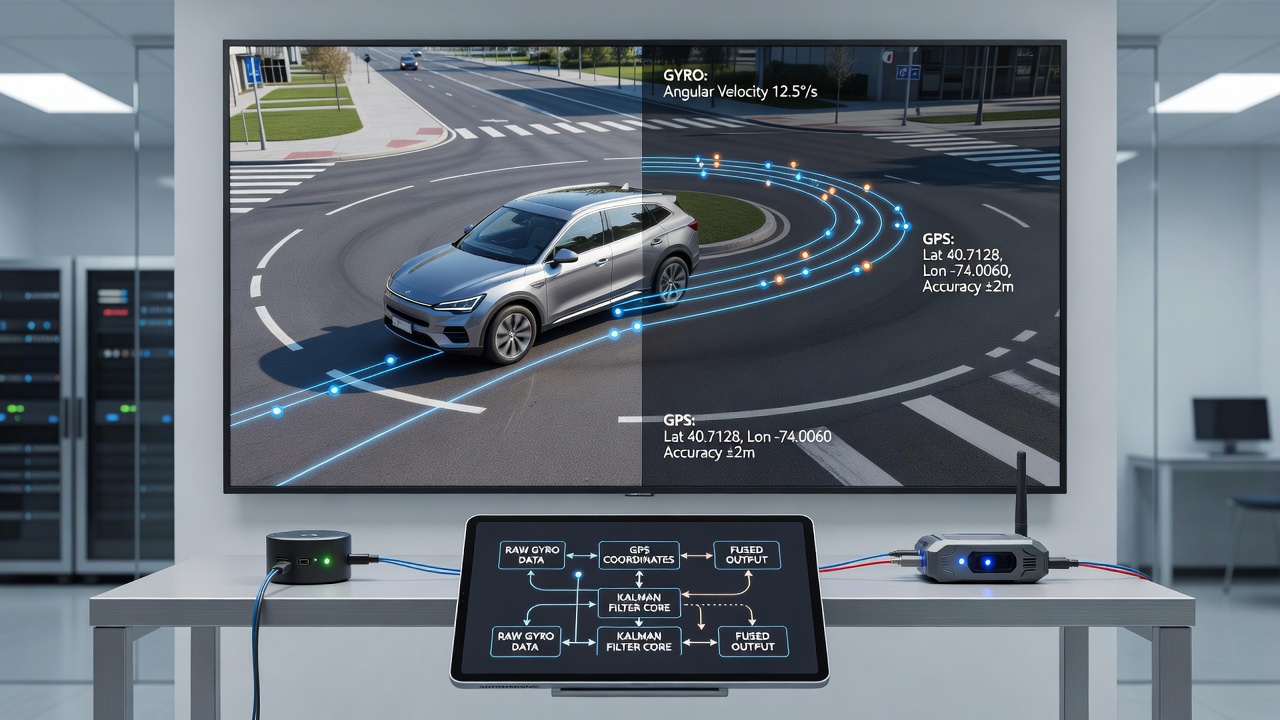
Engineers combine both through filtering techniques that weigh each source according to its reliability at any moment. Complementary filters offer a lightweight approach where high-pass filtering on gyroscope outputs removes drift and low-pass filtering smooths GPS noise. Kalman filters extend this process by maintaining a state estimate that incorporates measurement uncertainties and predicts future vehicle states based on Newtonian motion models. Research from the University of Melbourne demonstrates that extended Kalman variants reduce heading errors by up to 40 percent compared with single-sensor methods in simulated track environments.
Implementation Steps in Mobile Game Engines
Game studios first calibrate device sensors at startup to establish baseline offsets for gyroscope bias and GPS horizontal accuracy. During gameplay the fusion pipeline samples gyroscope data at 100 Hz while GPS updates arrive at 1 Hz, requiring interpolation to align timestamps. Developers then feed fused outputs into vehicle rigid-body simulations so that steering wheel angle responds proportionally to detected yaw rates and forward velocity matches GPS-derived speed when satellite lock remains stable.
Additional layers handle edge cases such as tunnel sections where GPS vanishes entirely. In those intervals the algorithm propagates position using integrated gyroscope and accelerometer readings until satellite reacquisition occurs. Figures from industry reports show that titles released after 2024 achieve smoother lap-time consistency when these fallback mechanisms activate without noticeable jumps in vehicle behavior.
Performance Gains Documented Across Racing Titles
Players experience tighter control during hairpin turns because fused data supplies continuous orientation updates even when GPS momentarily loses lock. Data collected from leaderboard submissions in 2025 reveals that games employing advanced fusion record fewer off-track incidents per race compared with older titles that used gyroscope data alone. European gaming associations have tracked similar patterns across regional tournaments where device variability affects input quality yet fusion compensates effectively.
Resource allocation in these systems stays modest because modern chipsets handle matrix operations required by Kalman filters without frame drops. By June 2026 multiple studios had published patch notes detailing refined covariance tuning that further lowered latency between physical device movement and on-screen vehicle response, bringing mobile handling closer to dedicated console wheel peripherals.
Challenges and Ongoing Refinements
Device heterogeneity presents ongoing hurdles since gyroscope sensitivity and GPS chipset quality differ across manufacturers. Developers address this through runtime profiling that adjusts filter gains based on detected hardware profiles. Academic papers from Canadian research institutions highlight machine-learning extensions that train models on crowdsourced driving traces to predict optimal fusion weights for specific phone models and track layouts.
Network-assisted GPS augmentation from cellular providers supplies additional velocity constraints that improve fusion accuracy during straight-line sections. Integration of these external corrections occurs seamlessly within the same filtering framework, maintaining consistency when players switch between Wi-Fi and mobile data connections.
Conclusion
Sensor fusion of gyroscope and GPS streams underpins realistic vehicle handling in contemporary mobile racing simulations by compensating for individual sensor weaknesses through continuous state estimation. As hardware capabilities advance and algorithms incorporate more contextual signals, developers continue refining these methods to deliver consistent physics across diverse playing conditions and device types.