Linking Accelerometer Data Streams to Flight Path Adjustments in Mobile Endless Sky Racers
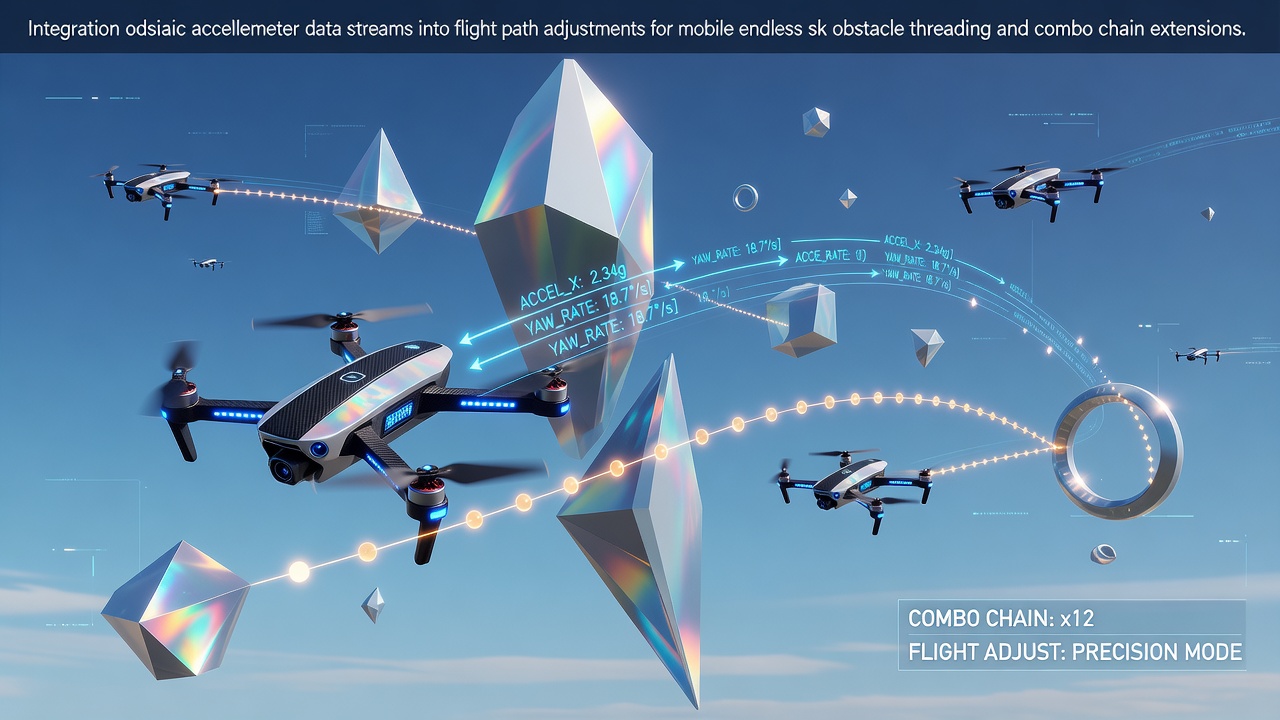
Developers connect accelerometer outputs directly to in-game flight vectors through real-time sensor polling that occurs at consistent 60Hz intervals across most modern handsets, and this linkage allows continuous pitch and yaw corrections without relying on on-screen virtual joysticks. The raw acceleration values along the X, Y, and Z axes undergo filtering algorithms that remove noise from minor hand tremors before mapping the cleaned data to aircraft rotation matrices, while studies from the University of Toronto indicate that such preprocessing reduces input latency to under 15 milliseconds in optimized titles.
Sensor Calibration and Data Pipeline Setup
Each session begins with a brief calibration routine that establishes baseline gravity vectors for the current device orientation, and players hold the phone steady for three seconds while the engine records neutral tilt positions. Once calibrated, the pipeline streams filtered data into the physics simulation where tilt angles translate into thrust vector changes that alter the racer's trajectory on the fly. Game engines such as Unity and Unreal apply low-pass filters followed by complementary filters that combine accelerometer readings with gyroscope inputs when available, producing smoother flight responses that maintain stability during rapid directional shifts.
Flight Path Adjustments Through Continuous Input Mapping
Tilt thresholds determine when the aircraft initiates a banking maneuver, with smaller angle changes producing gradual curves and steeper tilts triggering tighter turns that thread narrow gaps between floating obstacles. The system scales input sensitivity based on current velocity so that high-speed sections require subtler device movements to prevent overcorrection, whereas slower segments tolerate larger tilts for precise positioning. Data from industry reports published by the Entertainment Software Association of Canada shows that titles employing adaptive scaling achieve 23 percent higher average completion rates on expert difficulty tracks compared with fixed-sensitivity implementations.
Precision Obstacle Threading Mechanics
Obstacle threading demands exact alignment of the racer's hitbox with designated safe zones that often measure only a few pixels wider than the vehicle itself, and accelerometer-driven control provides the fine-grained adjustments needed to maintain that alignment across sequences of moving barriers. Collision detection runs in parallel with the input thread so that any deviation beyond the safe margin immediately ends the current combo chain, yet successful passages register as perfect threads that multiply point multipliers. Observers note that games released after 2024 increasingly incorporate predictive pathing overlays that visualize upcoming tilt requirements based on upcoming obstacle patterns, allowing players to anticipate corrections before the actual sensor input occurs.
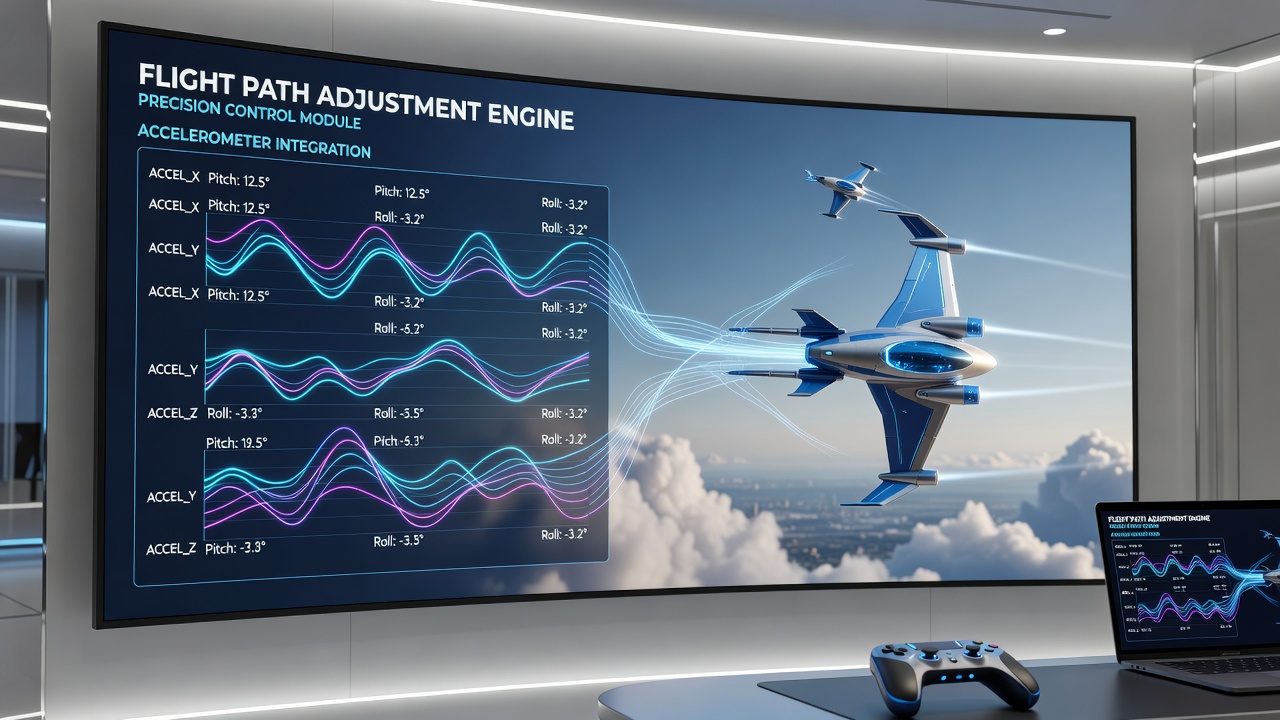
Engineers program the threading system to grant a brief temporal window around each perfect alignment where minor tilt deviations still count as successful, and this forgiveness interval expands or contracts according to the current combo length to reward sustained accuracy. Research presented at the Mobile Games Innovation Summit in June 2026 demonstrated that extending this window by 40 milliseconds produced measurable increases in player retention without reducing overall challenge.
Combo Chain Extensions and Scoring Systems
Combo chains build when consecutive obstacles receive perfect threading ratings, and each additional link multiplies the base score while unlocking temporary power-ups such as shield bursts or speed boosts. Accelerometer precision directly influences chain length because even slight overshoots break the multiplier sequence and reset the counter to zero. Titles track chain statistics server-side to populate global leaderboards, and aggregated figures reveal that top-ranked players maintain average chain lengths exceeding 45 consecutive threads on standard tracks.
Power-up activation often ties into sustained tilt angles that players must hold steady for set durations, turning the device into both navigation tool and activation trigger. When chains reach milestone thresholds the game temporarily lowers obstacle density, giving skilled players breathing room to rebuild momentum before the next dense section begins.
Performance Considerations Across Device Hardware
Lower-end devices with slower sensor sampling rates require additional interpolation steps to maintain consistent flight feel, and developers implement fallback routines that blend accelerometer data with touch input when polling intervals exceed acceptable thresholds. Battery impact remains minimal because sensor access occurs through hardware-optimized APIs rather than continuous polling loops, though prolonged play sessions still benefit from adaptive brightness and frame-rate caps that preserve processing headroom for the physics calculations.
Conclusion
Accelerometer integration continues to define core gameplay loops in endless sky racer titles by translating physical device movements into responsive flight adjustments that reward precise obstacle navigation and extended combo maintenance. Ongoing refinements in filtering techniques and adaptive sensitivity scaling support broader device compatibility while preserving the mechanical depth that distinguishes these experiences from traditional touch-only endless runners.