Examining Procedural Weather API Integrations in Location-Based AR Mobile Titles for Adaptive Environmental Puzzle Mechanics and Exploration Routing

Developers in location-based augmented reality mobile titles pull live weather data through procedural APIs to reshape environmental puzzles and guide player routes dynamically. These systems connect external weather feeds directly to in-game mechanics so that rain might flood pathways while clear skies unlock elevated routes or visibility bonuses. The approach creates adaptive layers where puzzle solutions shift based on current conditions rather than fixed scripts.
Core API Integration Patterns
Teams connect services such as OpenWeatherMap or national meteorological endpoints to AR engines through REST calls that refresh every few minutes. Data streams feed into procedural generation modules which alter terrain textures, particle effects, and collision volumes in real time. Observers note that this linkage allows puzzles to respond to variables including precipitation intensity, wind direction, and temperature ranges without requiring manual updates from designers.
Research from the University of Melbourne indicates that location-based titles using these APIs achieve higher session retention when weather events align with physical surroundings. The integration occurs at the client level where GPS coordinates trigger localized queries, and results populate shader parameters that modify AR overlays. Developers often cache short-term forecasts to maintain continuity during brief network interruptions while still preserving responsiveness to sudden changes.
Adaptive Puzzle Mechanics
Environmental puzzles in these titles incorporate weather states as core variables. A bridge-crossing challenge might require players to wait for wind gusts to subside or leverage accumulating snow to create temporary platforms. API-driven logic evaluates incoming data against puzzle parameters and recalculates solution paths accordingly. One documented implementation adjusts water level markers in river-based riddles based on rainfall totals reported by regional stations.
Studies show that such mechanics encourage repeated visits to the same physical locations under different conditions. Players discover that a heatwave state might reveal hidden thermal vents while a storm activates conductive surfaces for circuit completion tasks. The procedural layer ensures each session presents fresh configurations even when the underlying map remains constant.
Exploration Routing Adjustments
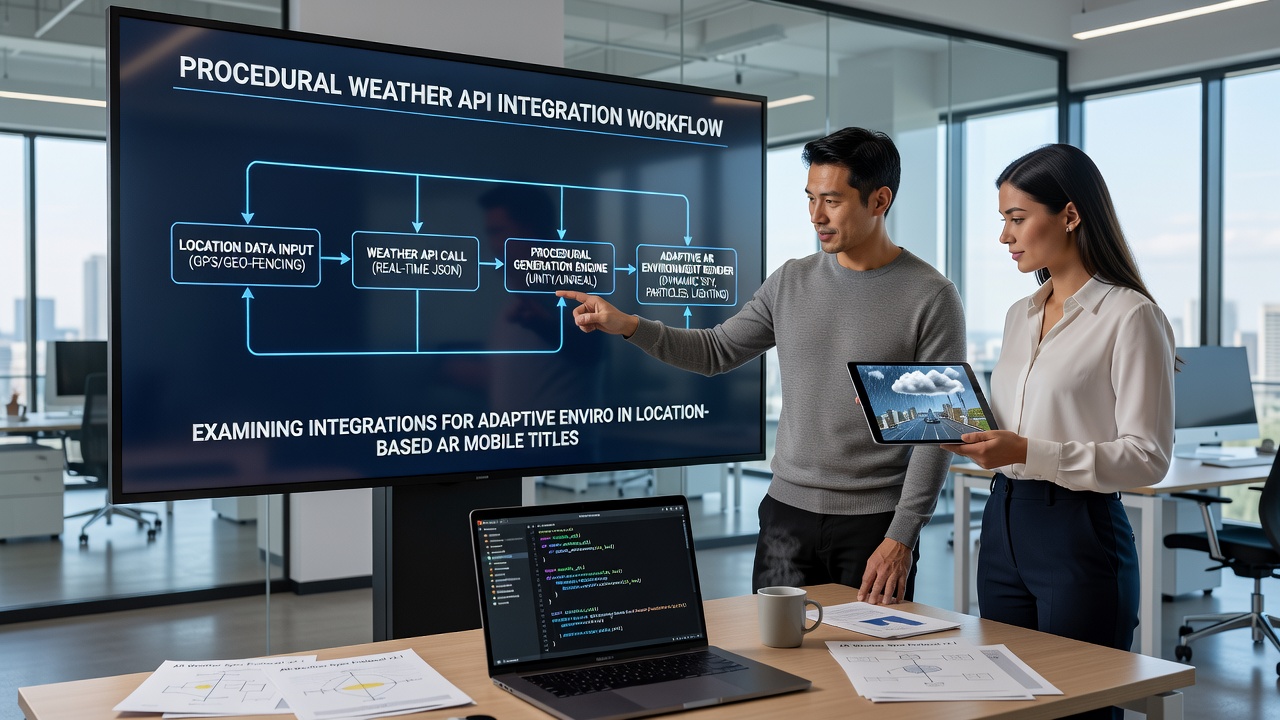
Routing systems use weather inputs to suggest or enforce path modifications during exploration segments. When APIs report incoming fronts, the game engine highlights alternative corridors that avoid flood-prone zones or wind-exposed ridges. Navigation arrows in the AR view shift automatically and distance calculations update to reflect altered terrain accessibility. This creates a feedback loop where real meteorological events influence virtual guidance without breaking immersion.
Figures from industry reports compiled by the Interactive Games and Entertainment Association reveal that titles employing weather-aware routing see measurable increases in total distance traveled per session. The system prioritizes safety margins by cross-referencing wind speed thresholds against character movement capabilities before committing to a suggested route. Developers maintain fallback algorithms that revert to static paths when data latency exceeds defined tolerances.
Technical Implementation Considerations
Engineers handle API latency through predictive buffering that blends forecast models with live readings. Sensor fusion combines device GPS accuracy with weather station triangulation to minimize location drift during route calculations. Error handling routines detect API outages and substitute regional averages while logging discrepancies for later analysis. As of July 2026 several platforms have standardized on hybrid APIs that merge satellite imagery with ground observations for finer puzzle granularity.
Performance testing across multiple device tiers confirms that weather processing overhead remains manageable when calculations run on background threads. Memory allocation for dynamic assets scales with the number of active weather layers yet stays within mobile constraints through texture atlasing techniques. Cross-platform consistency requires careful calibration of coordinate systems so that a storm event registers identically on both iOS and Android builds.
Case Examples in Current Titles
Several released titles demonstrate these integrations in practice. One exploration-focused AR experience recalibrates collectible spawn rates according to humidity levels reported by nearby stations. Another puzzle series uses temperature gradients to control ice formation mechanics that players must navigate during timed challenges. These implementations rely on publicly available weather endpoints rather than proprietary systems which lowers maintenance overhead while preserving data freshness.
Additional examples include route optimization features that reroute players around lightning risk zones when APIs flag elevated storm activity. The same frameworks support community-driven events where collective player actions influence virtual weather persistence across shared map regions. Data indicates consistent uptime across major releases when redundant API providers are configured in failover sequences.
Conclusion
Procedural weather API integrations continue to expand the design space for location-based AR mobile titles by tying real environmental data to puzzle resolution and route selection. The technical patterns established through these systems support ongoing evolution as meteorological services improve resolution and update frequency. Developers maintain focus on reliable data pipelines and responsive game logic to deliver consistent player experiences across varying physical locations and device capabilities.