Deciphering Pattern Recognition in Endless Runner Mobile Games for High Score Milestones and Character Unlock Paths
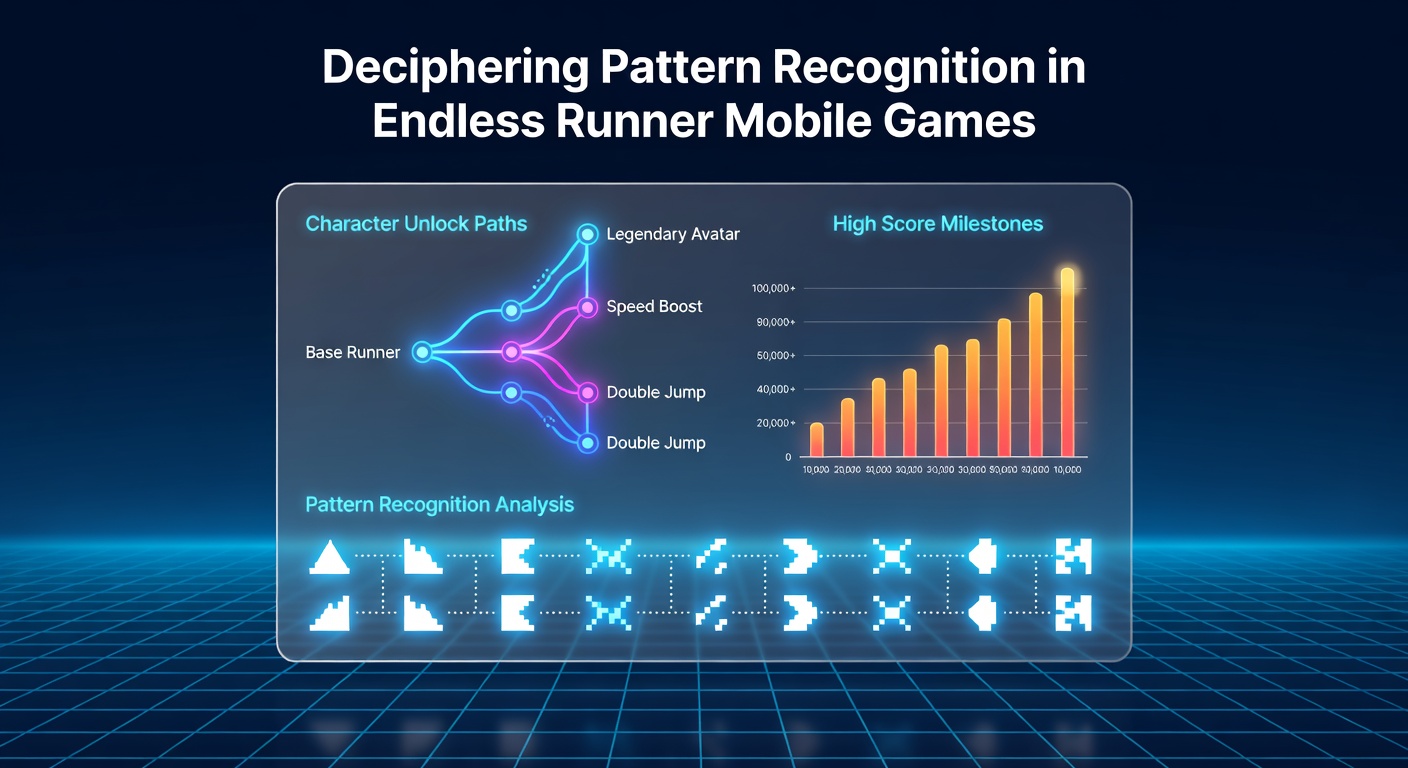
Endless runner mobile games rely on players learning repeating sequences in obstacle layouts, speed ramps, and item placements while they maintain forward momentum through procedurally generated or fixed stages. Pattern recognition emerges as players track recurring gaps between barriers, timing windows for jumps or slides, and coin cluster formations that align with multiplier zones. Those who study these elements often achieve consistent progress because they anticipate changes before they appear on screen. Data from mobile analytics platforms indicates that sessions exceeding ten minutes typically involve players adapting to at least three distinct pattern cycles per run.
Core Mechanics Driving Pattern Identification
Developers structure levels around modular segments that repeat with variations in height, spacing, and frequency, so players who map these segments gain advantages in navigation accuracy. Speed increases occur at predictable intervals tied to distance traveled, and observers note that successful runs frequently coincide with players adjusting input rhythms just before acceleration phases begin. Power-up placements follow similar modular logic, appearing after specific obstacle sequences or near environmental landmarks that repeat across maps. Research conducted at the University of Toronto's Gaming Research Lab shows that visual cue repetition strengthens memory retention for obstacle timing, allowing players to reduce reaction latency during extended sessions.
Environmental hazards such as moving platforms or collapsing structures introduce secondary layers where patterns emerge from synchronized movements rather than static layouts. Players combine recognition of primary obstacle chains with awareness of these dynamic elements, creating layered decision trees that support longer survival times. In May 2026 several major titles released seasonal updates that layered new hazard cycles onto existing maps, increasing the number of simultaneous patterns players must track without altering core controls.
High Score Milestones and Adaptive Recognition Strategies
High score systems reward both distance traveled and collected resources, so players optimize routes that maximize item pickups while minimizing deviation from safe lanes. Pattern mastery appears when runners identify safe corridors that persist across multiple speed tiers, enabling them to chain combos without interruption. Figures from industry tracking services reveal that top percentile scores in established titles often result from runs where players executed identical movement sequences for the first 60 percent of each stage before adapting to randomized final segments.

Score multipliers activate through sustained performance streaks, and these streaks align with particular pattern clusters that appear at set distances. Those who map multiplier trigger points can deliberately steer toward them while avoiding riskier alternative paths. A report published by the Interactive Games and Entertainment Association in Australia documented that players who completed pattern recognition drills outside active gameplay sessions improved their in-game high scores by measurable margins across multiple titles. Milestone achievements also unlock visual indicators that highlight upcoming pattern shifts, providing real-time feedback that reinforces learning loops.
Character Unlock Paths Tied to Recognized Sequences
Unlock systems frequently require completion of cumulative objectives that embed pattern-based challenges, such as surviving specific obstacle sequences a set number of times or collecting themed items during designated pattern windows. Character progression trees map directly onto these requirements, so players advance fastest when they recognize which runs satisfy multiple unlock conditions simultaneously. Data compiled by European mobile gaming observatories indicates that unlock rates accelerate once players master three or more core pattern families, because overlapping objectives become easier to satisfy in single attempts.
Seasonal events in 2026 introduced limited-time unlock paths that demanded recognition of event-specific pattern variants, including altered timing for temporary hazards and bonus item spawns. Players who documented these variants through repeated play sessions completed the associated character trees more efficiently than those relying on trial and error alone. Unlock notifications often appear immediately after pattern milestones are reached, creating feedback that strengthens retention of the sequences involved.
Recognition Tools and Training Approaches Observed in 2026
Community resources and built-in replay systems allow players to review runs and isolate recurring sequences for study. Slow-motion analysis of recorded footage reveals exact timing offsets between similar-looking obstacles, supporting precise calibration of input timing. Training modes introduced in several titles during May 2026 isolated individual pattern families, letting players drill recognition without the pressure of full runs. These modes correlate with faster overall progress according to aggregated telemetry from major platforms.
Cross-game pattern similarities exist because many developers share asset libraries or employ comparable procedural generation algorithms. Players who transfer recognition skills between titles often reach high score thresholds quicker in new releases. Analytics summaries from North American studios confirm that skill transfer occurs most readily when core movement inputs and visual cue styles remain consistent across games.
Conclusion
Pattern recognition forms the foundation for both sustained high scores and efficient character progression in endless runner mobile games. Players who systematically identify repeating sequences gain measurable advantages in timing, resource collection, and objective completion. Updates released in May 2026 expanded the complexity of these sequences while preserving the underlying learning mechanisms that reward observation and adaptation. Continued development of training features and replay tools supports ongoing refinement of these skills across the genre.