Connecting Device Orientation Sensors to Puzzle Resolution Mechanics in Augmented Reality Mobile Applications for Spatial Alignment Precision and Layer Stacking Solutions
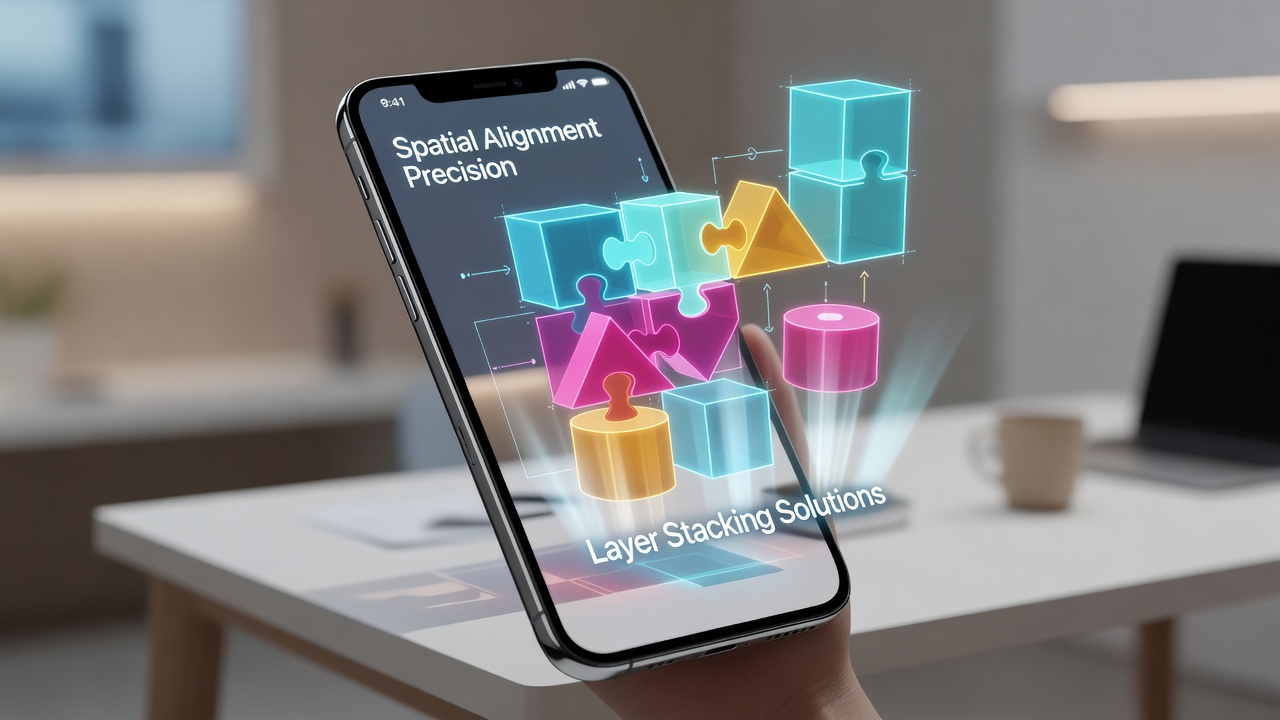
Device orientation sensors such as accelerometers and gyroscopes form the backbone of spatial interactions in augmented reality mobile applications, and developers connect these components directly to puzzle resolution systems that demand precise alignment of virtual elements. These sensors track the phone's tilt, rotation, and movement in three-dimensional space while the application translates raw data streams into commands that adjust puzzle layers accordingly. Research from institutions like the University of Melbourne indicates that integration pipelines often use sensor fusion algorithms to combine accelerometer readings with gyroscope outputs, which reduces drift errors and maintains consistent tracking during extended play sessions.
Sensor Data Processing and Real-Time Mapping
Applications process orientation data at frequencies around 60 to 120 hertz to achieve responsive puzzle feedback, and this rate allows virtual objects to shift position in sync with physical device movements. Developers map quaternion values or Euler angles from the sensors onto coordinate systems within the AR environment, which enables puzzles to respond to subtle tilts that align fragmented layers into complete forms. Data from the Google ARCore documentation shows that motion tracking APIs handle these transformations while filtering out minor vibrations from user hands, and the result supports stable layer positioning even when players adjust their grip or walk around the play area.
Calibration routines run at the start of each session to establish a baseline orientation relative to the surrounding space, and subsequent sensor inputs adjust puzzle states dynamically. Engineers note that threshold values determine when a tilt registers as an intentional move versus incidental motion, which prevents unintended shifts in stacked elements during complex sequences.
Spatial Alignment Precision Techniques
Precision alignment relies on sensor-driven ray casting that projects device orientation into the virtual scene, and this technique helps players position layers with millimeter-level accuracy on screen. Applications often overlay visual guides such as alignment grids or proximity indicators that update based on live sensor feeds, and these cues guide users toward correct configurations without requiring manual input beyond device movement. Studies conducted at the Technical University of Denmark have examined how combining orientation data with depth sensors improves alignment success rates in layered puzzles by accounting for both rotation and forward-backward positioning.
Multiple coordinate transformations occur in the background to convert phone-centric sensor readings into world-space coordinates, and this step ensures that puzzle mechanics remain consistent regardless of the player's starting location. Error correction modules compare predicted positions against actual camera feeds, and discrepancies trigger micro-adjustments that keep stacked layers from drifting out of sync.
Layer Stacking Mechanics and Resolution Logic
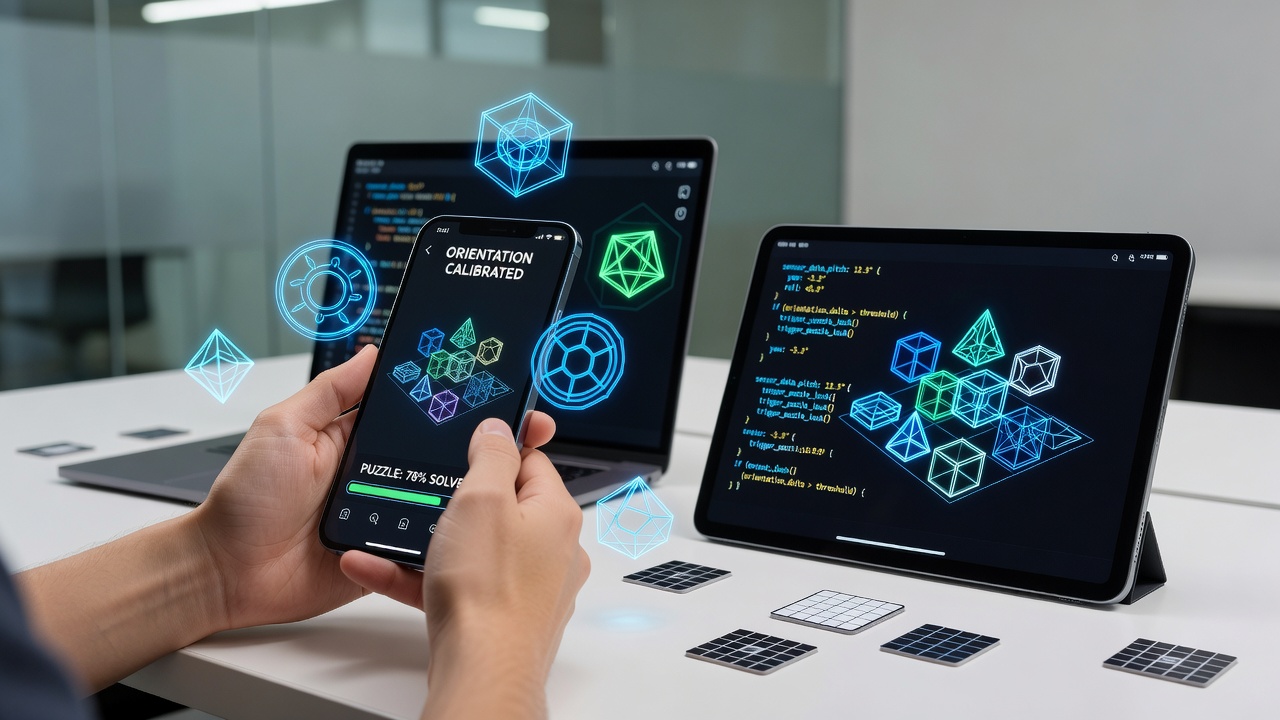
Layer stacking solutions treat each virtual element as an independent plane that responds to orientation changes, and players rotate the device to bring planes into contact at specific angles. Resolution logic evaluates whether stacked layers meet predefined geometric criteria such as edge matching or rotational symmetry, and successful alignments trigger progression or reveal hidden content. Applications built on ARKit frameworks incorporate similar sensor linkages, which allow stacking sequences to incorporate gravity simulations that pull layers downward when the device tilts past certain thresholds.
Developers implement state machines that track partial alignments across multiple layers, and these systems store intermediate sensor values to resume complex puzzles after interruptions. Observers note that collision detection routines run alongside orientation processing to confirm physical contact between layers before marking a stack as complete, which adds an extra verification step that maintains puzzle integrity.
Integration Challenges and Optimization Approaches
Latency between sensor input and visual output remains a primary challenge, and teams address it through predictive filtering that anticipates device movement based on recent velocity trends. Battery consumption rises when continuous sensor polling combines with camera processing, so applications often reduce sampling rates during less interactive phases while preserving precision during alignment-critical moments. Reports from the Canadian Institute for Advanced Research highlight how optimized threading models separate sensor handling from rendering pipelines, which sustains frame rates above 30 frames per second on mid-range devices.
Cross-platform compatibility requires abstraction layers that normalize sensor data across iOS and Android hardware variations, and these layers map differing scale factors into unified units. Testing protocols simulate real-world conditions such as walking or rotating in place to verify that stacking mechanics hold under variable motion profiles.
Developments Anticipated by June 2026
By June 2026 updates to core AR frameworks are expected to introduce improved magnetometer fusion for better yaw stability, and this advancement should enhance layer stacking accuracy in environments with magnetic interference. Industry reports suggest that machine learning models trained on large sensor datasets will further refine threshold detection, allowing puzzles to adapt dynamically to individual user movement patterns. Such changes build on existing architectures without requiring complete rewrites of puzzle resolution code.
Conclusion
Device orientation sensors continue to drive innovation in AR puzzle design by providing direct control over spatial alignment and layer interactions, and the techniques described here represent established practices in current development. Ongoing refinements in sensor fusion and data processing promise greater reliability across diverse hardware, which supports more intricate stacking solutions in future applications. Those who study these systems recognize the value of precise mapping between physical motion and virtual outcomes for creating engaging, technically robust experiences.