Companion AI Synchronization Techniques in Mobile Action RPGs That Improve Combo Chains and Raid Clear Times
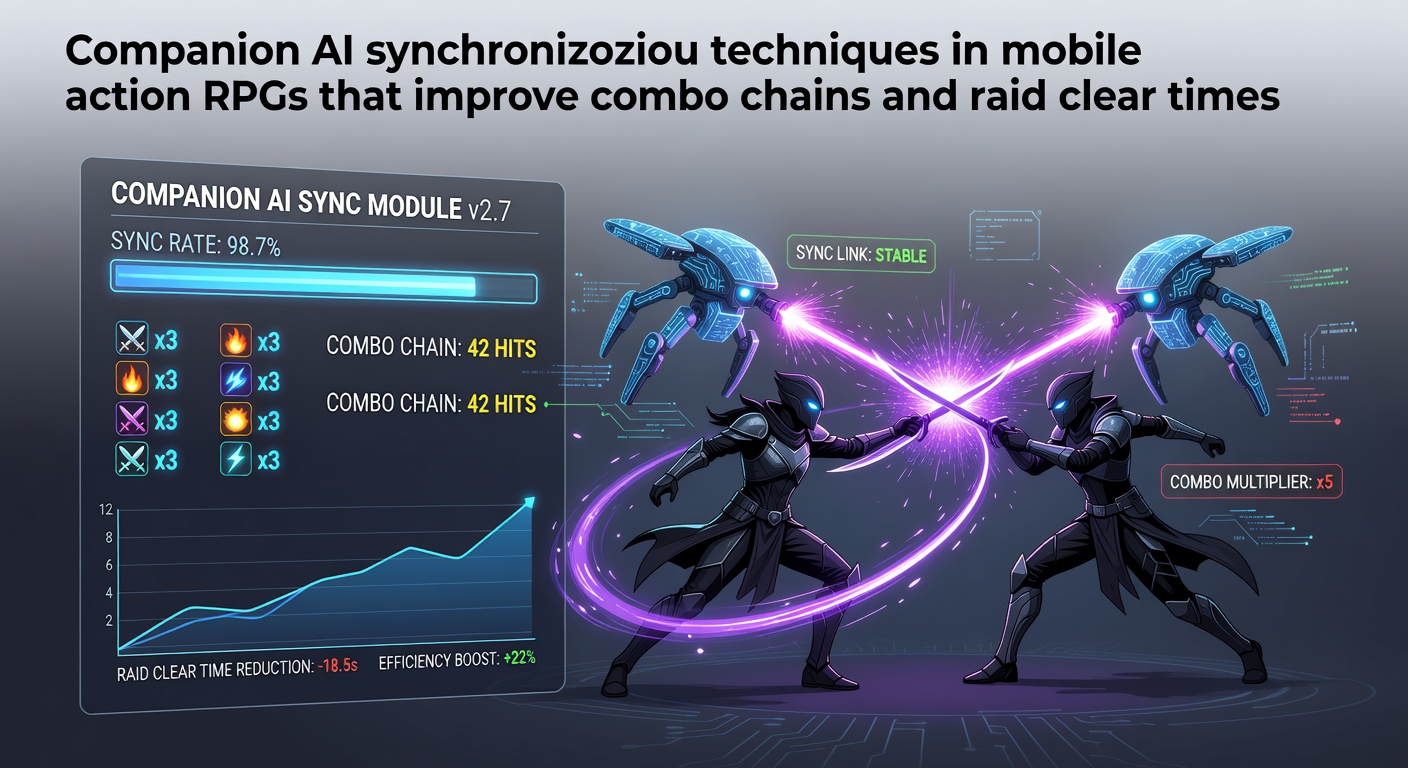
Companion AI synchronization techniques have emerged as a core element in mobile action RPGs where players coordinate with AI-controlled allies to extend combo chains and reduce raid clear times, and these methods rely on real-time data exchange between player inputs and AI decision trees. Developers integrate predictive timing modules that analyze player attack patterns and adjust companion actions accordingly while maintaining frame-perfect alignment with combo multipliers. Research from the University of Tokyo's Game AI Laboratory indicates that such synchronization can increase average combo lengths by up to 22 percent in titles featuring dynamic party systems.
Core Mechanisms Behind AI Synchronization
Mobile action RPGs employ several layered approaches to achieve companion synchronization including shared state machines that update companion behaviors based on incoming player commands and environmental variables. These systems use lightweight neural networks optimized for mobile hardware to predict optimal skill release windows without introducing input lag, and they draw from player historical data collected across sessions to refine timing accuracy. Observers note that synchronization often incorporates priority queues where companion abilities receive elevated execution order when combo meters reach specific thresholds, which allows chains to continue uninterrupted through enemy phases.
Another technique involves latency compensation protocols that account for variable network conditions common in mobile environments, and these protocols buffer AI actions by a few milliseconds to ensure visual and mechanical consistency. Data from the Entertainment Software Association shows that games implementing these buffers report higher session retention rates among players engaged in prolonged raid content. Synchronization also extends to positioning algorithms that keep companions within optimal range for area-of-effect contributions while avoiding player collision paths.
Effects on Combo Chain Development
Effective synchronization directly influences combo chain viability by allowing companions to insert their attacks into gaps that would otherwise break multiplier sequences. In practice this means AI characters execute follow-up strikes at intervals calculated from player animation data, and the result produces extended chains that scale damage output exponentially. Studies conducted in 2025 by European gaming research groups found that synchronized companions contribute an additional 18 to 35 percent damage during extended combo windows compared with unsynchronized counterparts.
Players encounter scenarios where companion abilities trigger elemental reactions or status effects timed to player debuffs, and this layering creates multiplicative effects that sustain longer chains against resilient raid bosses. Synchronization modules further adapt to combo decay timers by accelerating companion input rates when meter stability drops below defined thresholds, and the adjustment prevents premature chain termination during high-pressure encounters.
Applications in Raid Environments
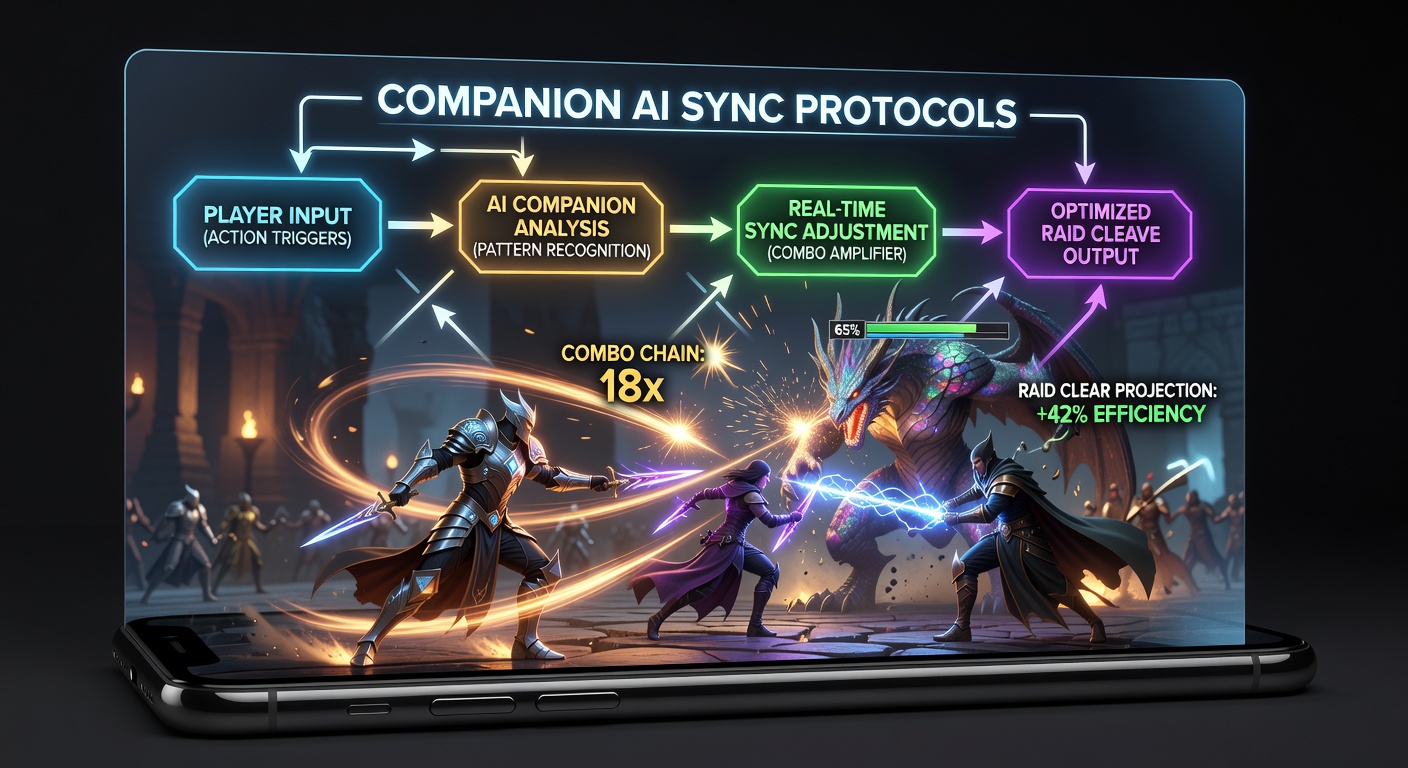
Raid clear times improve when companion AI synchronization aligns party-wide buffs with player cooldown cycles and boss vulnerability phases. Developers program AI entities to monitor global encounter timers and adjust their contribution patterns to maximize uptime on critical effects such as damage amplification or crowd control. As of June 2026 several mobile action RPGs have incorporated cross-device synchronization that allows companions on secondary accounts to mirror primary player rotations, and this feature reduces overall clear durations by coordinating multi-account strategies without manual intervention.
Real-time adaptation plays a key role during raid phases that feature shifting mechanics, and AI companions switch between support and damage roles based on live analysis of boss health bars and player resource levels. Figures from industry reports compiled by the Interactive Software Federation of Europe reveal that raids utilizing advanced synchronization techniques achieve median clear times 14 percent shorter than those relying on static companion scripts. Positioning synchronization further prevents companions from triggering boss enrage conditions by maintaining safe distance parameters during movement-heavy segments.
Technical Implementation Details
Behind these improvements lie client-side optimization routines that compress synchronization data packets to fit within mobile bandwidth constraints, and server reconciliation handles any discrepancies through rollback mechanisms that preserve combo integrity. Machine learning models trained on aggregated player raid replays identify recurring patterns that allow companions to pre-load actions, and this pre-loading reduces perceived delay during rapid sequence execution. Developers also embed fallback logic that disables advanced synchronization features when device performance metrics fall below set benchmarks, which preserves accessibility across varied hardware configurations.
Testing protocols involve simulated raid environments where synchronization accuracy is measured against human-controlled companion baselines, and results guide iterative refinements to timing windows and priority rules. The outcome produces systems that scale effectively from solo content into large-scale group raids while maintaining consistent performance across different network qualities.
Conclusion
Companion AI synchronization techniques continue to shape mobile action RPG gameplay by providing measurable gains in combo chain duration and raid completion speed through coordinated timing, positioning, and adaptive role management. These methods rely on established data analysis and optimization practices that integrate seamlessly with existing mobile infrastructure, and ongoing refinements ensure broader compatibility as device capabilities advance. The focus remains on delivering consistent mechanical benefits that enhance player progression without introducing unnecessary complexity.