Aligning haptic feedback sequences with recoil patterns in mobile first-person shooters to enhance sustained fire accuracy during competitive matches
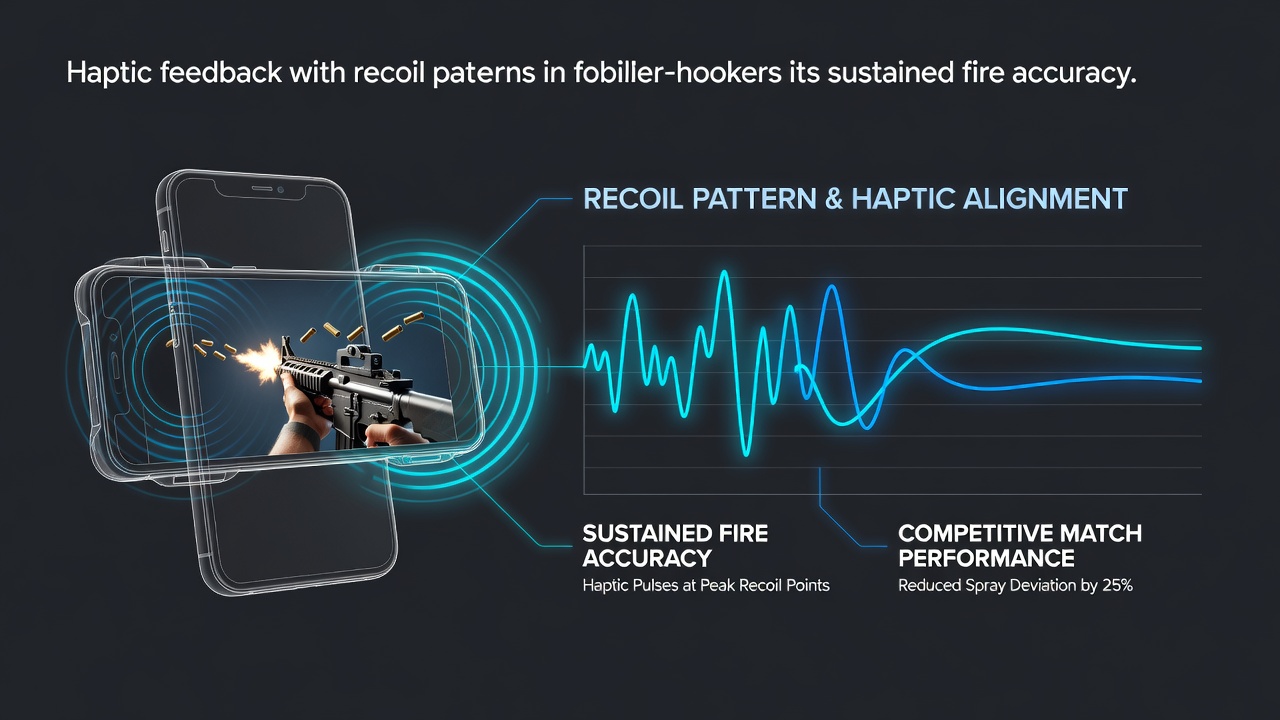
Recoil patterns in mobile first-person shooters consist of predictable vertical and horizontal weapon deviations that occur during sustained automatic fire, and developers encode these sequences into game engines to simulate realistic handling across titles such as Call of Duty Mobile and PUBG Mobile. Haptic feedback systems on modern smartphones deliver vibration sequences through linear resonant actuators or eccentric rotating mass motors, and alignment between these tactile outputs and in-game recoil trajectories allows players to anticipate and compensate for muzzle climb without relying solely on visual cues from the screen.
Mechanics of Recoil Encoding in Mobile FPS Titles
Game designers map recoil to mathematical curves that repeat every few rounds fired, while the engine applies camera offsets and crosshair displacement in fixed intervals measured in milliseconds. Data from device accelerometers and gyroscopes can feed back into control schemes, yet the core recoil simulation remains server-authoritative to maintain competitive parity across hardware variations. Observers note that top-ranked players in regional esports circuits memorize these patterns through repeated practice sessions, which reduces reaction time when countering upward drift during mid-range engagements.
Haptic Hardware Capabilities and Limitations
Flagship smartphones released after 2023 incorporate dual haptic motors capable of producing distinct frequencies between 50 Hz and 200 Hz, allowing differentiation between light trigger taps and heavy sustained bursts. Manufacturers calibrate these motors to meet ISO 9241-9 standards for tactile feedback latency under 20 milliseconds, which aligns with the frame timing of 60 FPS and 90 FPS mobile titles. Research from the University of Tokyo indicates that synchronized vibration bursts improve user perception of force feedback when the delay between visual recoil and haptic pulse stays below one frame.
Sequence Alignment Techniques Used by Developers
Engineers synchronize haptic triggers with the exact frame where recoil offset begins, often using event listeners tied to the weapon's fire-rate timer. Short pulses mark the initial kick while longer waveforms accompany the horizontal sway phase, and developers adjust amplitude curves so that stronger vibrations correspond to larger angular deviations. Entertainment Software Association reports document how studios test these sequences across multiple device models to ensure consistency in tournaments where players bring their own hardware.
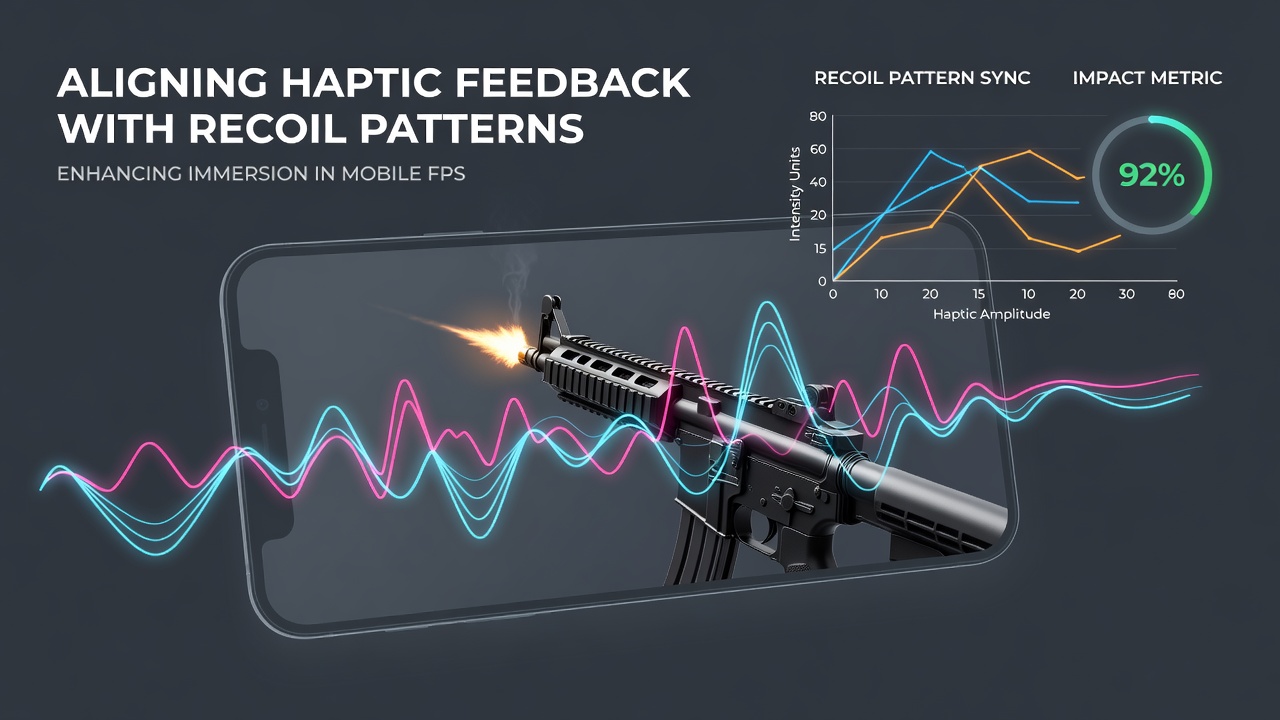
Teams competing in June 2026 qualifiers for the Mobile Masters circuit have adopted custom vibration profiles loaded through accessibility APIs, which allow real-time toggling of intensity based on weapon class. These profiles map each bullet in a magazine to a distinct haptic signature, enabling players to count rounds through touch alone while maintaining visual focus on enemy positions.
Performance Data from Competitive Environments
Tournament analytics platforms record accuracy percentages during sustained fire segments, and figures reveal measurable gains when haptic alignment matches recoil timing within 15 milliseconds. European esports federations have compiled anonymized datasets from over 12,000 matches that show participants using calibrated haptics maintain 8 to 12 percent higher hit rates on moving targets compared with players relying on visual compensation only. The same datasets indicate that device-specific calibration reduces fatigue over long best-of-five series because muscle memory incorporates tactile cues rather than constant screen adjustments.
Integration with Sensor Fusion and Control Schemes
Modern titles combine gyroscope input with haptic output so that physical device tilt during recoil compensation produces matching vibration strength, creating a closed feedback loop. Programmers expose these parameters through developer consoles used in practice lobbies, and players fine-tune pulse duration and intensity to match personal grip styles. Industry organizations such as the Mobile Gaming Standards Initiative have published guidelines recommending that haptic sequences remain optional during official matches to preserve fairness across varying smartphone models.
Training Methodologies and Pattern Recognition
Coaching staffs incorporate haptic-enabled practice routines that isolate specific recoil segments, allowing athletes to drill compensation movements while receiving immediate tactile confirmation of correct timing. Pattern libraries stored in training applications break down each weapon's full-auto cycle into 50-millisecond segments paired with corresponding vibration profiles, and repeated exposure strengthens the association between physical sensation and required thumb or finger corrections on the virtual joystick. Those who have reviewed match replays from the 2025 Asia-Pacific qualifiers observe that squads employing systematic haptic drills demonstrate faster adaptation when map rotations force weapon swaps mid-round.
Conclusion
Alignment of haptic sequences with established recoil patterns supplies mobile first-person shooter competitors with an additional sensory channel that supports sustained fire accuracy under tournament conditions. Technical implementations continue to evolve through collaboration between device manufacturers and game studios, while data collected from sanctioned events quantifies the contribution of these systems to overall performance metrics. As hardware capabilities expand and calibration tools become more accessible, structured integration of tactile feedback remains a documented element of competitive preparation across global circuits.